A Survey of Invertebrates and Fungi
This week the In-Person Lab and Make Up Module webpages are the same. If you miss lab, contact your TA for approval ASAP to discuss how to complete the Lab work on your own.

Read the Lab Manual Lab Unit 7 and focus on the important Characters explained for Fungi and Invertebrates.
Background Information on Fungal and Invertebrate Groups:
Fungi
General Background & Cool Videos:
Fungi play a very important role in the world. They can be useful ecologically by forming mychorrhizae associations with plant roots, decomposing dead plant and animal matter, and stabilizing sewage. Fungi are usually classified as molds, mildews, yeasts, mushrooms and puffballs. They are known as a group of organisms that are lacking in chlorophyll, are usually non-mobile, filamentous and multicellular, and have chiton in their cell walls.
Introduction to the Fungi (also click on other links within for Life History and Ecology) – Use Safari or Firefox for this link to see images and the needed Life History and Ecology links. They do not show well in Chrome.
Fungal Video Clips: time lapse photography can help us see just how cool fungi are!!!
- Stalking the Wild Mushroom (nice background on groups) (5:24)
- The Fastest Living Thing on the Planet (5:00) – Pilobolous! a Zygomycete that grows on poop!
- Basidiomycete growth and spore release (1:33)
- Attack of the Killer Fungi (3:04) – Cordyceps (Ascomycete fungi) attack insects.
- Slime molds on the Move (4:02)
We will focus our lab efforts on learning about 3 Fungal Divisions/Phyla and 2 Fungal Associated groups.
Comparing Fungal Life Cycles for the Zygomycota, Basidiomycota, Ascomycota, and fungal related groups Lichen and Slime Molds will help you fill out Table 7-1. These groups are separated based upon their hyphae, reproductive structures and life cycles.


Additional fungal information can be found within the Fungal/Invertebrate Webquest Assignment.
Fungal Associated Groups (often studied with fungi, but not true fungi)


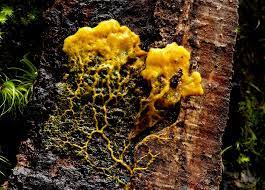
Slime Molds
- What is a Slime Mold?
- “Fungus” of the Month – good background
- Slime mold information – use Safari or FireFox


Invertebrate Animals
Click on each Phyla below to help you with the Invert part of the Webquest. You may need to click on links within each of these linked pages. There are also good links within the Webquest to help answer questions.
| Phyla and Basic Characteristics | |
| Annelida Arthopoda Cnidaria Echinodermata Mollusca Nematoda Platyhelminthes Porifera |    |
Comparison of Animal and Fungal Life Cycles
Additional Invertebrate information can be found within the Fungal/Invertebrate Webquest Assignment.
Activity 1: Dichotomous Keys:
Working with your group:
- In this lab we will use dichotomous keys to separate organisms into different groups based on their differences. We will learn about and focus on important key characters found among all the groups and see how they differ.
- Activity One: Practice Key Construction (in the lab manual) will help you better understand how to use a dichotomous key. Groups will share results.
Activity 2: Familiarity with the Fungi
- Fill in Table 7-1 in your provided paper handout as you visit each of the Fungal Group demonstration areas around the lab room. You may discuss your answers with your table mates and come to a consensus for each of the Fungal Characters in Table 7-1.
- As a group, construct your own dichotomous key for the Fungi. Be prepared to share your group’s key with the class. Does it work?
Activity 3: Familiarity with the Invertebrates
- Proceed to the Invertebrate groups, and come to a consensus for each of the Characters listed on Table 7-3. Fill in Table 7-3 in your lab manual/provided handout AND as a group and come to a consensus for each of the Fungal Characters in Table 7-3.
- Using Dichotomous Keys: Unknown Invertebrates. Watch videoclips of invertebrate organisms and use the key below to place each one in the correct group. As a group, you will be assigned 2 videos to watch and determine their appropriate Invertebrate phyla. Groups will then present their videos, and provide an explanation of why that group was chosen using the Invertebrate Key to point out the key features of those groups.
- At the end of lab, you should have completed Tables 7-1 & 7-3 and feel more comfortable with understanding these groups and answer the End of Unit Questions.
- The completed End of Unit Questions and your Handwritten Tables 7-1 & 7-3 are due in Moodle 24 hours from the start of this in-person lad.
- Use the provided Invertebrate keys to help you ID the Group names for your 2 assigned unknown invertebrate groups. Provide the chosen steps/pathway with each of your pictures. Unknown Invertebrate movies – Invertebrate Key
Completed Unit Tables & End of Unit Questions Handout
Submit a picture or scan (JPG or PDF) of your completed Fungal and Invertebrate Character Tables 7-1 & 7-3 (paper handouts will be provided in lab) along with your End of Unit Questions in Moodle 24 hours after the start of lab.
Fungal and Invertebrate Webquest & Moodle Assessment
Use the links within the webquest and on this webpage to complete Webquest assignment. This will demonstrate your understanding of these groups and their representatives. This assignment is due 1 week after lab at the start of your regular day and time.
Once you submit the completed webquest, you will be able to access the Inverts & Fungi Assessment/Quiz in Moodle (also due 1 week from the start of your lab this week).
14 Fun Facts about Marine Bristle Worms (Polychaete Worms = a class of Annelida)
- check out the video of the 10 foot long Bobbit worm vs. Lion Fish at fact #9 (warning this does not end well)
Watch these Walking Corals strut their stuff – (“mushroom” coral)
Beautiful pictures and a short article on Echinoderm tube feet and papulae
New research on Starfish “body” plan – “… best described as just a head crawling along the seafloor,”
Graceful swimming crinoid (feather star)
Never Seen Before Colony of 1,000 Brooding Octopuses Found off the Californian Coast
Sea sponges launch slow motion snot rockets to clean their pores – open the article to see the embedded slow motion videos.
Cancer-like Slime Mold Growth Hints at Multicellularity – Interesting article on the possible origin of Slime Molds and multicellularity in Plants, Fungi and Animals.
How Zombie Fungi Hijack Host’s Brains
Seek by iNaturalist – app that helps you identify organisms: (plants, animals including insects, fungi)